
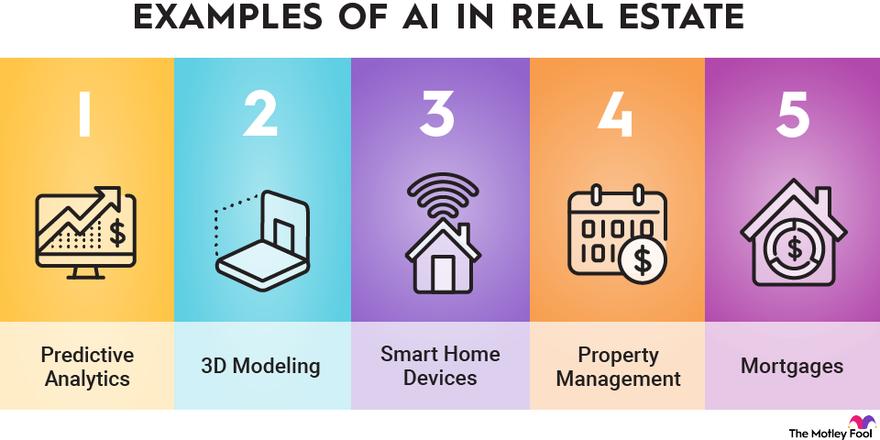
Let me tell you a story. It’s not a tale of dragons or hidden treasures, but it’s about a treasure of a different kind – the kind you can hold, the kind that builds futures: real estate. For years, I’d been wading through the property market, feeling like a sailor without a compass, tossed about by the waves of listings, opinions, and gut feelings. I’d pour over spreadsheets, squint at grainy photos, and spend weekends driving around neighborhoods, trying to decipher the unspoken language of bricks and mortar. It was exciting, yes, but also incredibly time-consuming and, frankly, often frustrating. I’d miss opportunities because I simply didn’t have enough information, or worse, I’d chase properties that, in hindsight, were never going to be the right fit.
Then, I stumbled upon something that felt like a lighthouse cutting through the fog: AI Real Estate Analytics. At first, the term sounded intimidating, like something out of a sci-fi movie. But as I delved deeper, I realized it was simply about using smart technology to make sense of the vast amount of data that exists in the property world. Think of it like having a super-powered assistant who can read, process, and understand more information about properties than I ever could on my own, and then present it to me in a way that’s actually useful.
My first real encounter with this was when I was looking for an investment property. I had a vague idea of the kind of returns I was hoping for, and a general area in mind. Traditionally, this would involve hours of research on rental yields, property appreciation trends, local economic indicators, and crime statistics. It was a tedious, manual process. But with AI analytics, it felt different. I fed my criteria into a platform – my desired return on investment, my budget, even my preferred neighborhood characteristics (like proximity to good schools or transport links).
Suddenly, a list of properties appeared, not just based on price, but on their potential. The AI didn’t just show me what was for sale; it showed me what was likely to perform. It highlighted properties with strong historical rental demand, areas projected for future growth, and even flagged potential risks I might have overlooked. It was like having a seasoned investor whispering insights directly into my ear, but with data to back every claim.
One particular property caught my eye. On the surface, it was a decent-looking house, but the AI flagged it as having exceptional upside potential. It pointed out that a new public transport line was scheduled to be built nearby, and that rental demand in that specific micro-market was already increasing due to a growing tech hub. It even analyzed past renovation trends in the area, suggesting that a modest upgrade could significantly boost its rental value. This level of detail was beyond anything I could have pieced together manually. I’d have to be in the right place at the right time, and possess an almost uncanny foresight to uncover these insights myself.
Armed with this AI-generated intelligence, I approached the property with a newfound confidence. I wasn’t just relying on my initial impression; I had data-driven reasons to believe in its value. I negotiated the price with a much stronger understanding of its true worth and future prospects. And you know what? The investment has been incredibly rewarding. The rental income has exceeded my expectations, and the property’s value has steadily climbed, just as the analytics predicted.
But AI real estate analytics isn’t just for seasoned investors or those looking to flip properties. It’s been a game-changer for me even when looking for my own home. You know that feeling of falling in love with a house, only to discover later that the neighborhood isn’t quite what you thought? Or that the commute is actually much longer than advertised? AI can help prevent those heartbreaks.
When I was searching for my current home, I used the analytics to understand the long-term desirability of different areas. It looked at factors like school district performance, future development plans, local amenities, and even walkability scores. I could see which neighborhoods were likely to remain vibrant and family-friendly for years to come, and which might face challenges. It helped me move beyond just the aesthetics of a house and focus on the sustainability of its location.
I remember one instance where I was drawn to a charming, older home in a seemingly quiet suburban area. The AI, however, flagged it as having a declining trend in property appreciation over the past five years, citing a lack of new infrastructure development and a decrease in young families moving into the area. While the house itself was lovely, the analytics painted a picture of a location that might not offer the kind of long-term value I was looking for. It was a tough pill to swallow, but ultimately, it saved me from a potential disappointment.
The beauty of AI in real estate analytics is its ability to process and correlate an immense amount of disparate data. It can look at macroeconomic trends, local zoning laws, demographic shifts, and even social media sentiment surrounding a neighborhood, and weave it all together into a coherent picture. For a human, this would be an impossible task. We are limited by our time, our cognitive capacity, and our personal biases. AI, on the other hand, is objective and tireless.
Think about it this way: imagine you’re trying to find the best restaurant in a new city. You could ask a few friends for recommendations, read a couple of online reviews, and hope for the best. Or, you could use an AI-powered app that analyzes millions of reviews, considers factors like cuisine type, price range, customer satisfaction, and even the time of day to recommend the perfect spot. AI real estate analytics is that super-powered app for property.
It has democratized access to sophisticated market insights. Before, you might have needed to hire an expensive consultant to get this kind of in-depth analysis. Now, through user-friendly platforms, these powerful tools are accessible to anyone who wants to make a more informed decision about buying, selling, or investing in property. It’s leveled the playing field, empowering individuals like me to compete with larger institutions that have always had access to advanced data.
One of the most fascinating aspects for me is how AI can predict future trends. While no one has a crystal ball, AI algorithms can identify patterns and correlations that human eyes might miss. For example, by analyzing historical sales data, economic indicators, and demographic shifts, AI can predict which neighborhoods are likely to see an increase in property values. This isn’t just guesswork; it’s informed prediction based on vast datasets.
I’ve seen this in action when considering areas that were considered "up-and-coming." Before AI analytics, identifying these areas often involved relying on anecdotal evidence or tips from local real estate agents. Now, AI can pinpoint them by analyzing factors like increased foot traffic in commercial areas, a rise in property searches in that zip code, or even a shift in the demographic profile of residents. It’s like getting an early warning about a rising tide, allowing you to position yourself strategically.
Moreover, AI has become an invaluable tool for understanding property valuation. Beyond the standard comparable sales (comps), AI can analyze a multitude of factors that influence a property’s worth. It can account for the impact of nearby amenities, school quality, crime rates, and even the specific features of a house (like a recently renovated kitchen or a desirable backyard). This provides a more nuanced and accurate valuation than traditional methods, which can sometimes be subjective.
When I was selling my previous home, the AI analytics helped me set a competitive yet realistic asking price. It took into account not just recent sales of similar homes, but also the unique selling points of my property and the current market conditions. This data-driven approach gave me the confidence to price it correctly from the start, which ultimately led to a faster sale at a price I was happy with. It removed a lot of the guesswork and anxiety associated with pricing a property.
The narrative of real estate is no longer just about physical structures; it’s increasingly about the data that surrounds them. AI real estate analytics allows us to interpret this narrative, to understand the underlying forces shaping the market, and to make decisions that are not driven by emotion or incomplete information, but by a clear, data-backed understanding. It’s about moving from a reactive approach to a proactive one, where we can anticipate opportunities and mitigate risks with greater certainty.
For anyone dipping their toes into the real estate market, whether as a buyer, seller, or investor, embracing AI analytics isn’t just an advantage; it’s becoming a necessity. It’s the digital compass that guides you through the complexities, illuminates the path ahead, and ultimately, helps you achieve your property dreams with greater confidence and success. My journey has been transformed by it, and I believe yours can be too. It’s not about replacing human intuition, but about augmenting it with powerful insights, making the journey of property ownership and investment a more informed, efficient, and ultimately, more rewarding experience.